
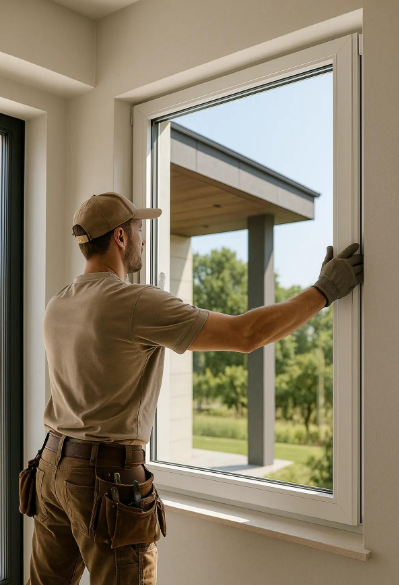
Replacing old windows can improve your home’s comfort, appearance, and energy efficiency. However, before choosing new units, homeowners need to understand the two main replacement methods: full-frame replacement and pocket installation. Each approach has different requirements, costs, and benefits.
Choosing the right method depends on the condition of your existing windows, the surrounding structure, and your renovation goals.
What Is Full-Frame Window Replacement?
Full-frame replacement involves removing the entire existing window unit, including the frame, trim, and other components down to the rough opening. The installer can then inspect the exposed area for moisture damage, deteriorated materials, or insulation gaps before fitting the new window.
This method is particularly useful when the existing frame is damaged, the window opening has water infiltration issues, or you want to change the window size or style. It also provides an opportunity to improve flashing, air sealing, and insulation around the opening.
Although full-frame replacement generally requires more labour and finishing work, it allows installers to address problems that might otherwise remain hidden behind the existing frame.
What Is Pocket Window Installation?
Pocket installation, sometimes called insert replacement, involves fitting a new window into the existing frame. The old window sashes and related operating components are removed, but the original frame remains in place.
This approach can be quicker and less disruptive because it typically requires less removal of interior and exterior finishes. It may also reduce installation costs when the existing frame is sound, square, and free from significant moisture damage.
However, pocket installation does not provide the same access to the rough opening. If the existing frame has rot, persistent leaks, or substantial structural problems, covering those issues with a new window will not resolve them.
Key Differences to Consider
The main distinction is how much of the existing window assembly is replaced.
- Scope of work: Full-frame replacement removes the complete unit and exposes the opening. Pocket installation retains the existing frame.
- Cost and disruption: Full-frame work usually involves more labour and may require repairs to surrounding finishes. Pocket installation is often less invasive when conditions are suitable.
- Design flexibility: Full-frame replacement can accommodate changes to the opening or window configuration. Pocket installation generally works within the dimensions and limitations of the existing frame.
- Inspection and sealing: Full-frame replacement offers better access for checking concealed damage and updating weatherproofing details. Pocket installation depends heavily on the condition and performance of the retained frame.
Which Option Works Best in Winnipeg?
Winnipeg’s cold winters make proper air sealing, insulation, and moisture management especially important. Before deciding, have the existing frame inspected for water damage, drafts, decay, and signs of movement.
Experienced window and door companies in Winnipeg can assess whether the existing frame is suitable for retention or whether complete removal is the more practical solution. Professional window installation in Winnipeg should also account for correct flashing, insulation, and sealing to help limit drafts and moisture intrusion.
Upgrade Your Windows With Confidence With Best Windows & Doors Inc.!
Choosing the right replacement method is an important step toward improving your home’s comfort and appearance. Best Windows & Doors Inc. helps homeowners explore window and door options suited to their properties and renovation plans. By considering frame condition, installation requirements, and long-term performance, you can make a more informed decision for your next home improvement project.